If you spend enough time in “degen” spaces - Discord servers, X (formerly Twitter) crypto circles, and Telegram trading groups - you’ll notice a distinct shift in how people view financial risk.
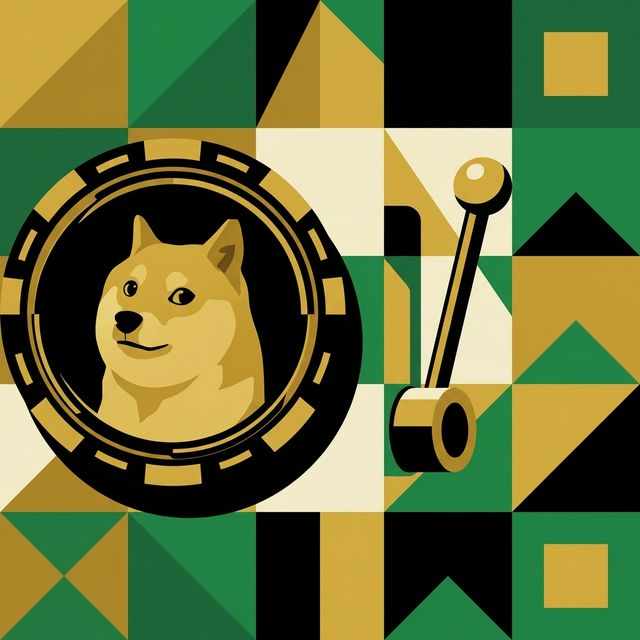
For the 21-29 demographic, pulling a lever on a physical slot machine feels archaic, corporate, and rigged. But putting $500 into a brand-new meme coin featuring a dog in a hat on the Solana blockchain? That’s seen as “community investing.”
In reality, the mechanics are identical. But the odds are vastly different.
The Slot Machine Disguised as a DEX
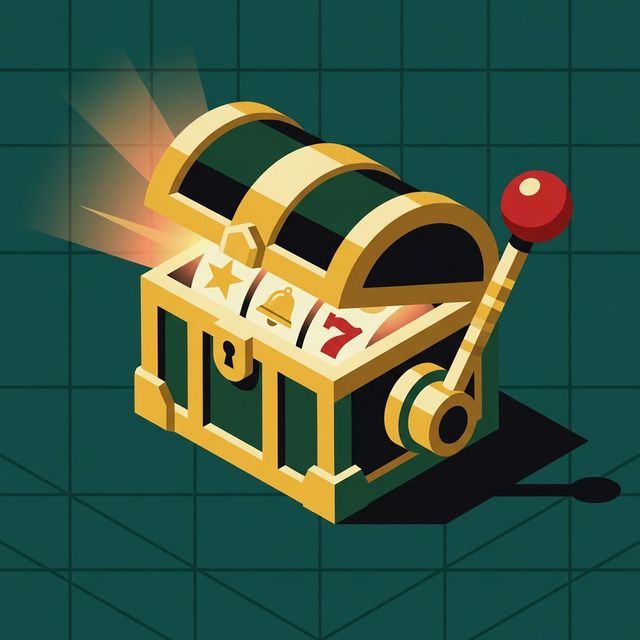
When you trade highly volatile meme coins on a Decentralized Exchange (DEX), you are interacting with pure casino mechanics, stripped of the neon lights and replaced with line charts.
The Pull
In a casino, you put money in and hit spin. In meme coin trading, you swap Solana (SOL) for a micro-cap token and watch the chart. The dopamine hit comes from the immediate, extreme volatility.
The Near Miss
Slot machines are programmed to show “near misses” (two jackpot symbols and a blank) to keep you playing. In crypto, the near miss is seeing another coin - one you almost bought - go up 10,000%. This fuels the FOMO (Fear Of Missing Out) that drives the next trade.
The Community Hype
While slots are solitary, meme coins are multiplayer. The “community” on Telegram acts as the cheering crowd, convincing you that your gamble is actually a collective movement.
The “House Edge” of a Meme Coin
In traditional casinos, games are regulated. A slot machine might have an RTP (Return to Player) of 95%, meaning the house edge is 5%. It’s mathematically certain, but transparent.
In the meme coin world, the “house” is the token’s developer and the insider cabal.
- Sniping: Bots buy up the supply in the exact block the token launches, ensuring they get the absolute lowest entry point.
- The Rug Pull: The developer holds a massive percentage of the supply across hidden wallets. Once retail investors pump the price, the developer sells everything, draining the liquidity pool. The house edge here isn’t 5%; it’s effectively 100% for the insiders.
THE MYTH
"If I get in early enough on a meme coin, I have an edge over the market."
THE REALITY
Getting in “early” on a public platform usually means you are simply the first wave of exit liquidity for the insiders who minted the token. You are playing a game where the dealer knows the order of the cards, and they take their cut before you even sit at the table.
Transparency vs. The Illusion of Control
The appeal of “degen” crypto trading is the illusion of control. Because you are analyzing charts, tracking developer wallets, and engaging in Discord, it feels skill-based.
THE PROVABLY FAIR ALTERNATIVE
If you enjoy the extreme volatility of crypto, treat it for what it is: a gamble. The difference between a meme coin and a transparent Web3 casino is that a legitimate platform uses Provably Fair algorithms. You can verify the randomness of every single roll or crash. With meme coins, the only thing guaranteed is that someone else controls the liquidity.
The Math Behind The Meme
Meme coin trading has successfully rebranded high-risk, unregulated gambling as a cultural movement. It is fast, entertaining, and highly social.
From a mathematical standpoint, throwing capital at anonymous developers on decentralized networks carries disadvantages that would make an old-school casino pit boss blush. If you engage, know the game you are actually playing.
Clipboard note: This article is for informational purposes only. Verifying smart contracts and liquidity locks does not eliminate the risk of total loss.
This article is for informational purposes only.